
Main Menu

Shopping for a new mattress should not require learning an entirely new vocabulary. Yet once you start comparing mattresses, you may quickly encounter terms like firmness, support, pressure relief, motion isolation, and foam density.
While some of these terms may sound technical, they are simply different ways of describing how a mattress feels, supports your body, and performs throughout the night. Understanding what they mean can make it much easier to compare your options and determine which features are most important to you.
The key is knowing that these terms describe different aspects of how a mattress feels and performs. A mattress can be soft but supportive, dense without feeling extremely firm, or excellent at pressure relief without being the right choice for every sleeper.
To better prepare you for your online mattress shopping experience, here are six common mattress shopping terms explained in plain English, along with what each one can tell you about the mattress you are considering.
1. Firmness: How Soft or Hard a Mattress Feels
Firmness describes how soft or firm a mattress feels when you lie on it.
Mattress companies frequently use a 1-to-10 firmness scale, with lower numbers representing softer mattresses and higher numbers representing firmer options. There is no universal industry standard for this scale, however, so one company’s “medium” may feel slightly different from another’s.
Firmness is also subjective.
Your body weight, sleeping position, body shape, and personal preferences can all influence how firm a mattress feels.
For example, a person who weighs less may not sink as deeply into a mattress and could perceive it as firmer. A heavier sleeper may compress the same comfort layers more deeply and experience a softer feel. This is one reason mattress shopping is about more than simply asking, “Do I want a soft or firm bed?”
According to the Sleep Foundation’s guide to mattress firmness, mattress construction and materials also influence how firmness is experienced.
Plain English: Firmness is how hard or soft the mattress feels underneath you.
2. Support: How Well the Mattress Keeps Your Body Aligned
Firmness and support are often treated as interchangeable terms, but they are not the same thing.
Support refers to a mattress’s ability to hold your body in a relatively neutral position instead of allowing certain areas to sink excessively.
A supportive mattress should respond to the weight of different parts of your body. Your shoulders, waist, hips, and legs do not place equal pressure on a mattress, so the surface needs to accommodate those differences while helping maintain comfortable alignment.
This means a mattress does not have to feel extremely firm to provide adequate support.
In fact, research examining mattress firmness has found evidence supporting medium-firm mattresses for comfort, sleep quality, and spinal alignment in certain populations.
A systematic review published in the National Library of Medicine evaluated 39 articles, examining mattress characteristics in relation to sleep quality, back pain, comfort, and spinal alignment. The researchers concluded that medium-firm mattresses generally promoted comfort, sleep quality, and spinal alignment. The review also noted that mattress selection should account for the way the sleep surface interacts with the body’s curves rather than relying on firmness alone.
This distinction is important when shopping online. A mattress that feels very firm at the surface is not automatically providing better support. If the mattress does not allow areas such as the shoulders and hips to settle appropriately, the sleeper may not achieve the balance between cushioning and alignment that he or she needs. Conversely, a mattress with softer comfort layers may still provide substantial underlying support when those layers are paired with a properly designed support core.
In other words, think of firmness as what you feel and support as what the mattress is doing beneath you.
The important takeaway is not that everyone needs a medium-firm mattress. Instead, it demonstrates that
“harder” does not automatically mean “more supportive.”
Plain English: Support is how well the mattress holds your body where it needs to be held.
3. Pressure Relief: How Well a Mattress Cushions High-Pressure Areas
Have you ever slept on a surface and woken up with a sore shoulder or uncomfortable hip?
Pressure relief may be part of the equation.
When you lie down, your body weight is not distributed evenly. Certain areas, particularly the shoulders and hips, can experience more concentrated pressure against the sleep surface.
Pressure relief describes how effectively a mattress redistributes that weight and cushions those higher-pressure areas.
Mattresses with contouring comfort materials can allow areas such as the shoulders and hips to sink slightly into the surface instead of pressing firmly against it.
The Sleep Foundation explains that effective pressure relief involves distributing body weight and reducing pressure around common contact points such as the hips and shoulders.
Memory foam is particularly well known for this characteristic because it responds to heat and pressure and conforms around the body. The Sleep Foundation’s overview of memory foam notes its ability to contour around common pressure areas.
Pressure relief can be especially noticeable for side sleepers because the shoulder and hip make significant contact with the mattress.
Plain English: Pressure relief is the mattress’s ability to cushion areas that press hardest against the bed.
4. Motion Isolation: How Much You’ll Feel Someone Else Moving
Anyone who shares a bed has probably experienced this scenario:
You are sleeping peacefully. Your partner rolls over, gets out of bed, or comes to bed later than you do-and suddenly you’re awake.
That is where motion isolation comes in.
Motion isolation describes how well a mattress keeps movement contained to the area where it occurs instead of transferring that movement across the sleep surface.
Good motion isolation can be particularly valuable for couples, light sleepers, or anyone sharing a mattress with someone who changes positions frequently.
Different mattress materials handle motion differently.
Foam mattresses, and memory foam in particular, are often strong performers in this category because the material absorbs movement rather than allowing as much vibration to travel across the mattress. The Sleep Foundation’s motion isolation testing guide explains that memory foam compresses more directly beneath the sleeper, helping limit movement across the surrounding surface.
That does not mean motion isolation determines whether a mattress is “good” or “bad.” It is simply one performance characteristic to consider based on how you sleep.
Plain English: Motion isolation is how much-or how little-you feel your partner moving on the other side of the bed.
5. Foam Density: How Much Material Is Packed Into the Foam
Foam density may be one of the most misunderstood terms in mattress shopping.
Density describes the mass of foam within a specific amount of space. In the United States, it is typically expressed in pounds per cubic foot, or PCF.
Here’s the important part:
Density and firmness are not the same thing.
While density can influence a foam’s feel and performance, seeing a higher density number does not automatically tell you exactly how firm the mattress will feel.
Density can also affect characteristics such as durability, responsiveness, contouring, and how much weight a foam can withstand.
According to the Sleep Foundation, foam density can influence several performance characterisitcs. Higher-density foams generally tolerate greater pressure and weight, while lower-density foams tend to compress more easily. Density can also play a role in durability: higher-density versions of similar foam types generally resist wear and deterioration better than lower-density versions.
However, density should always be considered alongside the type and formulation of the foam. Two foams with similar density measurements can still feel and perform differently depending on how they are manufactured and where they are used within the mattress. A dense support foam near the bottom of a mattress has a very different job from a contouring memory foam used in the comfort layer.
That is why comparing density numbers alone does not provide the complete picture. Density can tell you something about the physical makeup of the foam, but it cannot independently tell you whether the finished mattress will feel plush, firm, responsive, or deeply contouring.
Think of density as one ingredient in the overall mattress recipe.
Mattress feel is created by the combination of materials, layer thicknesses, foam formulations, construction, and support layers-not one density number by itself.
Plain English: Foam density tells you how much material is packed into the foam, not simply how soft or hard the mattress feels.
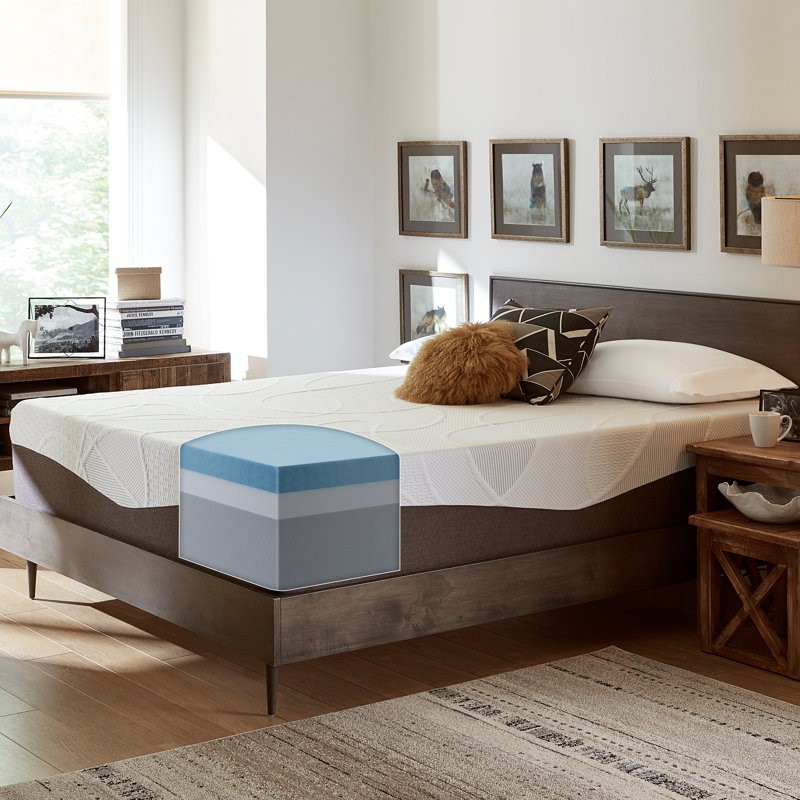
6. Sleep Trial: Time to Experience the Mattress at Home
Reading reviews, comparing materials, and studying mattress specifications can help narrow your options, but nothing replaces actually sleeping on a mattress in your own home.
That is the purpose of a sleep trial.
A sleep trial gives you time to experience a mattress through normal, everyday sleep instead of making a decision based on a few minutes of testing. This adjustment period is important because a new mattress may feel noticeably different from the one your body has grown accustomed to.
At Slumber Solutions, qualifying mattresses purchased directly through Slumber.Solutions include a 100-night sleep trial. We ask customers to sleep on their new mattress for at least 30 nights before making a final decision. This gives your body time to adjust to the feel and support of a new sleep surface.
If, after the first 30 nights, you decide the mattress is not the right fit, the trial can be extended through the 100th day following the purchase. Customers may donate the mattress to a local charitable organization or dispose of it through a local recycling center and provide the appropriate receipt. Once the required documentation is completed, Slumber Solutions refunds the full retail purchase price paid, minus sales tax. For financed purchases, any interest paid is not refundable.
It is also important to understand which products qualify. The Slumber Solutions 100-night trial currently applies to mattresses purchased directly from Slumber.Solutions for regular residential use. The trial does not extend to adjustable bases or mattresses purchased through another retailer or marketplace.
Understanding the complete sleep-trial policy before purchasing helps you know exactly what to expect. Rather than judging your new mattress based solely on the first night or two, a trial period gives you an opportunity to experience how it feels over time and make a more informed decision.
Plain English: A sleep trial gives you time to sleep on your mattress at home, allow your body to adjust, and decide whether it is the right fit for you.
Putting It All Together
The best way to shop for a mattress is not to focus on one buzzword.
Instead, think about how these characteristics work together.
Firmness tells you how soft or hard the mattress feels.
Support describes how effectively it holds and aligns your body.
Pressure relief addresses cushioning around areas such as your shoulders and hips.
Motion isolation determines how much movement travels across the bed.
Foam density provides information about the construction and characteristics of the foam.
And a sleep trial gives you an opportunity to experience the mattress in your own bedroom.
Understanding those differences can make product descriptions easier to compare and help you focus on the features that actually matter for the way you sleep.
An educated shopper does not necessarily need to become a mattress expert. The goal is simply to understand enough of the terminology to ask better questions, compare products more accurately, and recognize which specifications actually relate to personal comfort and sleep preferences. Instead of choosing a mattress because one number or marketing term sounds impressive, you can look at the complete construction and consider how its different features work together.
That is particularly important when shopping online, where you cannot always lie on a mattress before purchasing it. Clear product descriptions, construction details, firmness information, material specifications, customer policies, and sleep-trial terms can all provide useful pieces of the decision-making process. Knowing what those details mean helps you shop with greater confidence rather than simply relying on unfamiliar terminology.
We believe mattress shopping should feel straightforward-not overwhelming. The more consumers understand about what goes into a mattress and what common performance terms actually mean, the easier it becomes to separate useful information from marketing language and make an informed decision based on individual sleep needs.
Because at the end of the day, the goal is not to find the mattress with the most impressive list of features. It is to find a mattress that delivers the comfort, support, and sleep experience that works for you night after night.