
Main Menu
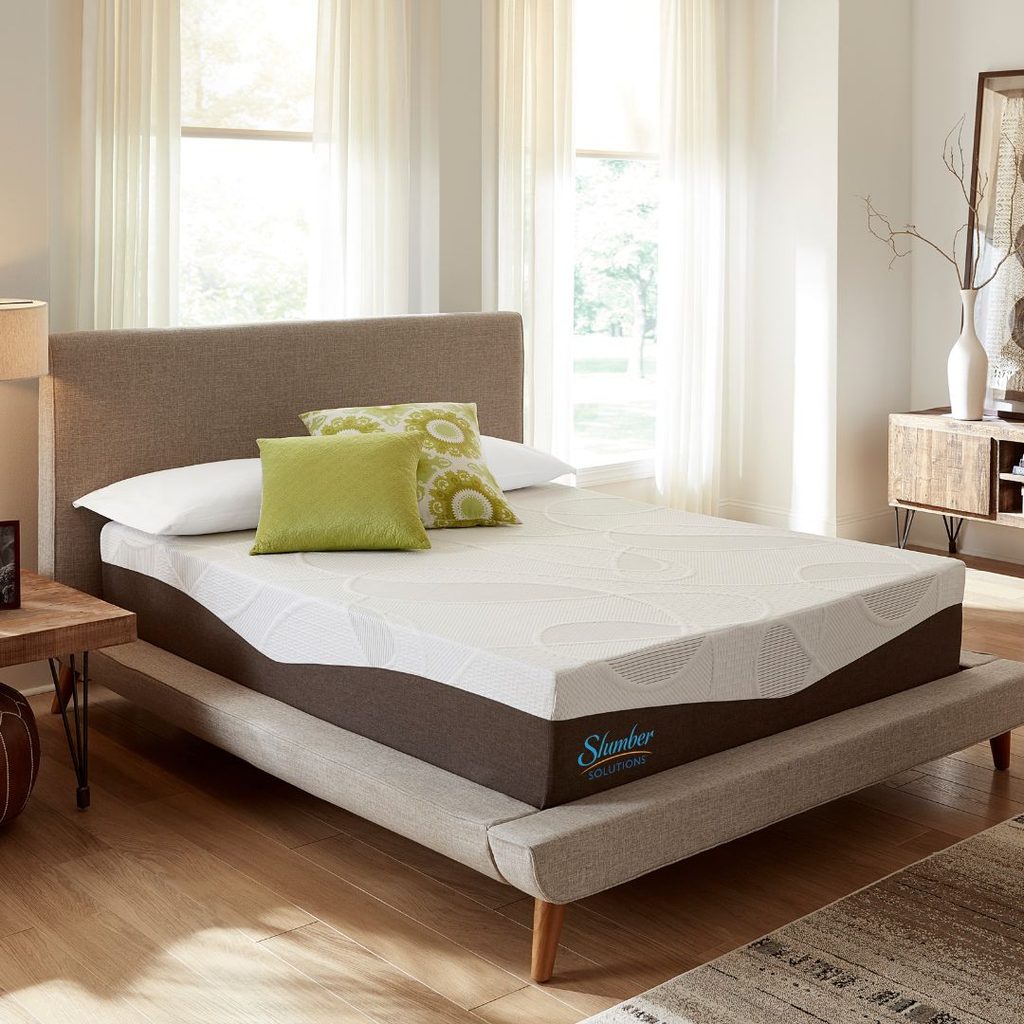
Choosing a new mattress often starts with one deceptively simple question: How firm should my mattress be?
You may have heard that a firm mattress is better for your back, while someone else may insist that a softer mattress is the secret to sleep better. The reality is more nuanced. There is no single firmness level that is ideal for every sleeper.
The right mattress should balance support, pressure relief, and comfort based on your body, preferred sleep position, and personal preferences. Understanding how firmness works – and how it differs from support – can make choosing a mattress considerably easier.
Our brand reflects that philosophy across mattresses designed for different sleep preferences, from the responsive feel of the Select Mattress to the deeper contouring of the Ebony Mattress and the combination of foam and pocket-coil support found in the Hybrid.
Mattress Firmness and Mattress Support Are Not the Same Thing
One of the most important distinctions in mattress shopping is the difference between firmness and support.
Firmness describes how soft or hard the surface feels when you lie down. Support describes how effectively the mattress responds to your body and helps maintain a comfortable sleeping position.
A softer mattress can still have a supportive core, while a very firm mattress is not necessarily the best choice for every sleeper.
The lesson is simple: firmer does not automatically mean more supportive.
For sleepers who want support without the deeply sinking sensation sometimes associated with traditional memory foam, the Select Mattress is designed with resilient NRGel memory foam that provides conforming pressure relief while creating more of an “on the mattress” than “in the mattress” feel.
How Firm Should a Mattress Be for Side Sleepers?
Side sleepers typically need more cushioning around prominent pressure points, particularly the shoulders and hips.
When a mattress is excessively firm, those areas may absorb too much pressure. Conversely, if the mattress allows the body to sink too deeply, maintaining comfortable alignment can become more difficult.
Mattress guidance from The Sleep Foundation generally places side sleepers toward the softer-to-medium end of the firmness spectrum, although recommendations shift based on body weight.
For sleepers who enjoy the traditional contouring sensation of memory foam, the Ebony Mattress is worth considering. Its activated carbon memory foam is designed to conform to the body while providing a soft, enveloping feel.
This type of contouring may appeal particularly to sleepers who want more cushioning around the shoulders and hips rather than the more responsive feel of the Select.
How Firm Should a Mattress Be for Back Sleepers?
Back sleepers usually need a balance between contouring and support.
The mattress should accommodate the body’s natural curves without allowing the hips and midsection to sink excessively. For many adults, a medium to medium-firm feel provides a useful starting point.
A 2021 systematic review examining mattress type, sleep quality, and low back pain found that medium-firm mattresses tend to promote comfort, sleep quality, and spinal alignment.
A newer orthopedic literature review reached a similar conclusion, finding that evidence most consistently favored medium-firm mattresses over extremely firm or very soft surfaces.
However, firmness labels alone do not tell the complete story. The materials beneath the surface also determine how the mattress responds to your body.
For example, the Hybrid mattress NRGEl memory foam with pocketed coils. The foam provides contouring and pressure relief, while the coil system creates responsive, targeted support. For sleepers who like some of the cushioning characteristics of memory foam but prefer a more traditional supportive feel underneath, a hybrid construction can offer an appealing middle ground.
What About Stomach Sleepers?
Stomach sleepers often prefer a somewhat firmer sleep surface because excessive sinking around the hips and abdomen can change how the body rests on the mattress.
The goal, however, is not to find the hardest mattress available. It is to find enough resistance to prevent excessive sink while maintaining comfortable pressure relief.
The Sleep Foundation’s firmness guide generally places stomach sleepers in medium to firm ranges depending on body weight.
Responsive mattresses such as the Select can be useful for sleepers who dislike feeling deeply enveloped by their bed. Its NRGel comfort layer is designed to provide pressure relief while maintaining a more resilient feel.
Your Body Type Changes How Firm a Mattress Feels
Mattress firmness is not experienced identically by everyone.
Body weight influences how deeply a person compresses the mattress’s comfort layers. A lighter sleeper may experience a particular mattress as relatively firm because they do not compress the surface as much. A heavier sleeper may engage deeper layers of that exact same mattress and perceive the feel differently.
Research into mattress biomechanics emphasizes the importance of individual body characteristics and sleeping posture when evaluating mattress design and support.
This is one reason numerical firmness rating should be viewed as a starting point rather than an absolute rule. Your proportions also matter. Shoulder width, hip width, weight distribution, and preferred sleeping position all influence how pressure is distributed across the mattress.
What If You Want More Than One Firmness Option?
Sometimes your preferred firmness changes, or you simply are not sure which you prefer.
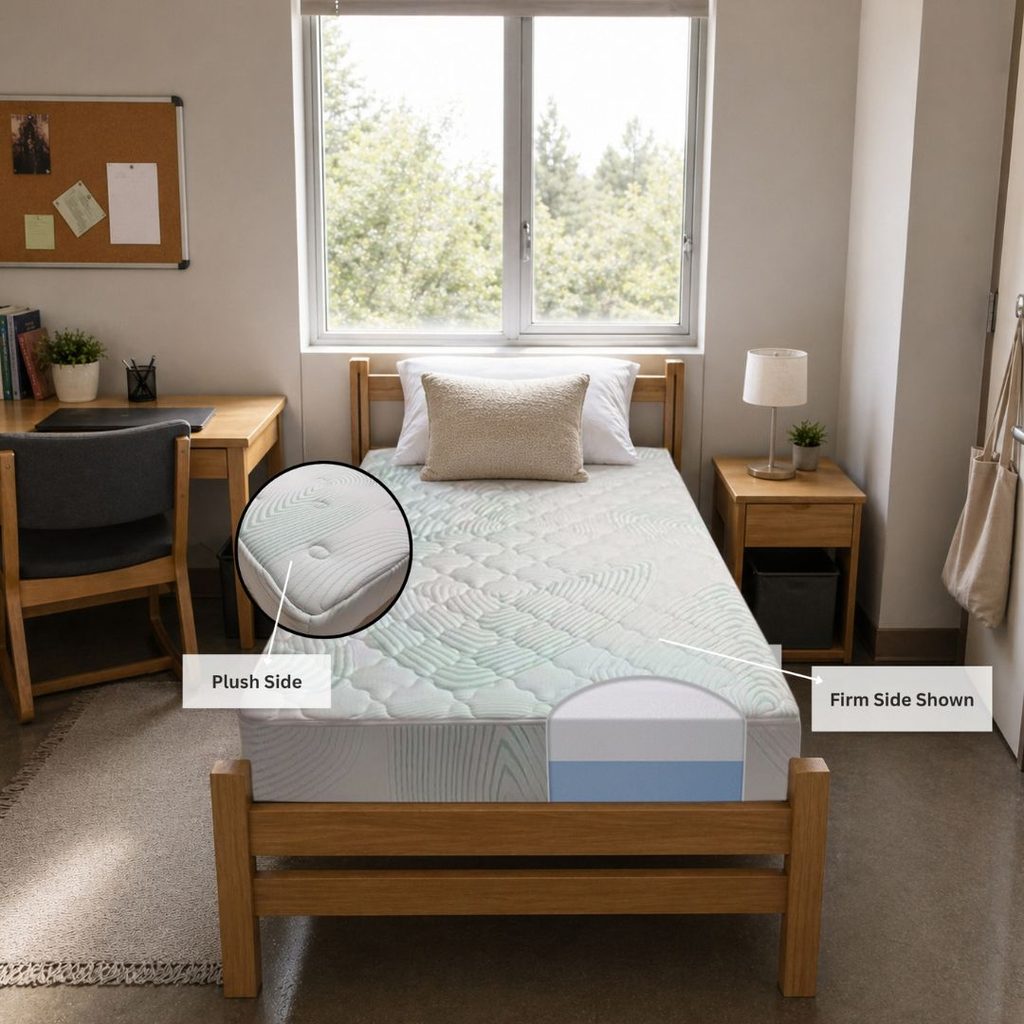
The University mattress provides an especially straightforward solution. The 7-inch mattress is dual-sided, with one plush side and one firm side, allowing sleepers to flip the mattress and choose between two different comfort levels.
Although designed with dorm rooms, guest rooms, apartments, and compact spaces in mind, its dual-sided construction is also a helpful example of why mattress firmness is so personal.
Is a Firm Mattress Better for Back Pain?
It is a common misconception that someone experience back discomfort should automatically choose the firmest mattress possible.
Scientific evidence does not consistently support that approach. The randomized controlled trial comparing firm and medium-firm mattresses found that participants using medium-firm mattresses experienced better outcomes for pain while lying down, pain upon rising, and disability.
Similarly, broader reviews of mattress research have generally favored medium-firm surfaces for balancing pressure distribution, spinal alignment, and comfort.
That does not mean a medium-firm mattress is the correct medical solution for every person experiencing back pain. Persistent or significant pain should always be discussed with an appropriate healthcare professional. It does mean that “the firmer, the better” is not a reliable mattress-shopping rule.
How Do You Know if Your Mattress Is Too Firm?
- Excess pressure around your shoulders or hips
- Difficulty settling comfortably into bed
- Frequent repositioning throughout the night
- Numbness or discomfort at pressure points
- A sensation that you are lying on top of an unyielding surface
The goal is enough contouring to distribute pressure without sacrificing the support your body needs.
So, What Is the Best Mattress Firmness?
There is no universal answer. Research suggests that medium to medium-firm mattresses provide a useful starting point for many adults, but mattress comfort remains highly individual.
Instead of asking only, “Is this mattress soft, medium, or firm?” ask: Does my body feel supported? Are my shoulders and hips comfortable? Can I relax without sinking too deeply? Do I like a responsive surface or a deeper memory-foam hug?
Those questions alone will tell you considerably more than a firmness label alone.
Our mattresses are cut, crafted, sewn, and shipped from Archdale, North Carolina, with multiple constructions designed for different comfort preferences – from responsive NRGel to traditional contouring memory foam and hybrid foam with coil support. Our mattresses are backed by a 100-night trial, giving shoppers an opportunity to experience their mattress at home.
Because ultimately, the right firmness is not the one someone else tells you to buy. It is the one that helps you sleep comfortably night after night.